Online and in-person courses focused on developing Transition Leadership competencies.

Customized eLearning, workshops, facilitation, and program design to lead climate action.

Research on how leadership and workforce development accelerates climate action across Canada.

Stay informed about ASI’s most recent news, blogs, reports, and publications.

Events that provide opportunities to connect, learn, and grow as climate leaders.

Helping Canadians see themselves as climate leaders

ONLINE

Climate Action & Transition Leadership

Next Offering: TBA

Course Overview

The climate crisis represents a failure of leadership. Outdated leadership models, characterized by short-term thinking, narrow focus on profit, and resistance to change, have contributed to the unsustainable exploitation of natural resources, pollution, and greenhouse gas emissions.

Offered in partnership with Royal Roads University, this course explores ASI’s six Transition Leadership competencies, offering alternative leadership frameworks designed to inspire climate action within your workplace, community, or personal life.

Want to know when the next course is happening? Fill out the subscribe form above and we’ll email you when dates/registration are announced.

Who should take this course?

This course is for individuals who recognize the limitations of outdated leadership models and want to explore alternative approaches to lead climate action.

It’s designed for professionals, community leaders, and anyone seeking to expand their leadership capacity to create meaningful, sustainable change in their workplace, community, or personal life.

Watch the Info Session

Curious about our climate leadership courses with Royal Roads University? Watch our recorded info session that provides more details on what to expect from each course.

Course Participant
Course Participant
Anonymous
"I had a great experience and some real "ah ha" moments that I will be implementing moving forward."
Course Participant
Course Participant
Anonymous
I loved the previous course, [CLCA], so I had to naturally take another course offering! Thank you for everything. The time spent in your class has been so lovely.
Course Participant
Course Participant
Anonymous
Great facilitation of synch sessions, both Nadine and Taylor exemplified the core course material in their deliveries.

Learning Outcomes

Instructors & Speakers

A grayscale portrait of a smiling woman, identified as Alexandra Stubbings, with shoulder-length hair. She's wearing a dark top and looking slightly to her left. The background is plain white, giving the photo a clean and professional appearance.

Alexandra Stubbings

Managing Director & Founder at Talik & Co

Alexandra consults and teaches on purpose-driven leadership and culture change. She has worked internationally with business, government, civil society, and networks, often facilitating dialogue and learning between them in pursuit of systems change. Highlights include integrating sustainability into the UAE’s national schools curriculum, facilitating dialogue on climate change with UK Members of Parliament, facilitating a systems-wide collaboration in the UK food sector to reduce environmental impacts of packaging, and leading learning conferences for low carbon development policy makers and experts. From an early career in change consulting in the City of London, she moved to Ashridge Business school in 2005, where she helped build the successful Sustainability Consulting practice.

Since 2013 she has led Talik & Company, a sustainability-focused Organisation Development consultancy. Notable clients include UK Central Government, UAE Ministry of Education, Microsoft, Barclays, Renewable Energy Systems, Rockefeller Foundation, UK Green Building Council, Low Emissions Development Strategies Global Partnership, Cambridge Institute for Sustainability Leadership. Her doctoral research into organisational engagement with sustainability produced a values-based systemic change model, now widely applied and taught in business schools, and due to be published in 2023 in a book chapter on relational team coaching.

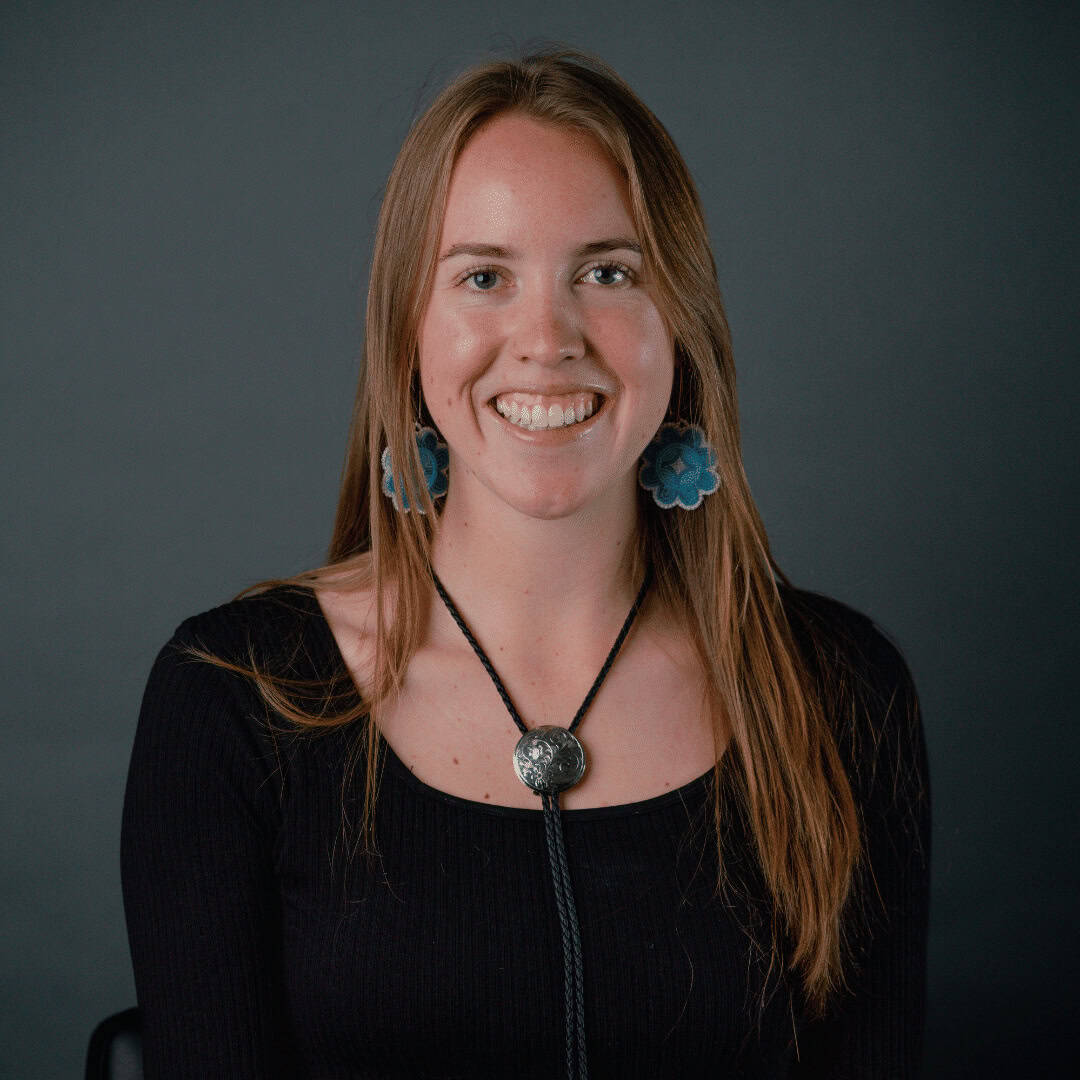
Smiling woman with long brown hair wearing a black top and blue flower-shaped earrings, reminiscent of a Freddie Huppé Campbell portrait, set against a dark background.

Freddie Huppé Campbell

Director of Energy & Climate at Indigenous Clean Energy

Freddie Huppé Campbell (she/they) is a Michif Two-Spirit human, urban raised on Ktunaxa Kinbasket territories. They strive to learn and grow in identity, culture, language, art and action. Freddie is the Director of the Energy & Climate team at Indigenous Clean Energy where they work to support community-led clean energy sovereignty and equitable, just climate action on national and global scales. She hopes to learn from past and present teachings and ground everything that she does in community and all her relations.

A woman with shoulder-length curly dark hair is smiling at the camera. She is wearing a dark blazer over a patterned blouse and a necklace with a pearl pendant, embodying the essence of transition leadership for a sustainable future. The background is a neutral gradient.

Nadine Gudz

Course Instructor for Collaborative Leadership for Climate Action

A seasoned sustainability leader and Clean50 honouree, Nadine led corporate sustainability strategy, partnership development and employee engagement initiatives for sustainable business pioneer, Interface Inc. for over ten years. Currently completing her Ph.D. in sustainability education and organizational change, she’s Faculty for the Graduate Certificate program in Corporate Social Responsibility and Sustainability at St. Michael’s College, University of Toronto. Nadine is a LEED accredited professional who has served on the Boards of the National Zero Waste Council, US Green Building Council Education Advisory Committee and Canadian Business for Social Responsibility.

Sara Graves, a smiling person with long brown hair and a white shirt, leans effortlessly against a light-colored wall.

Sara Graves

Lecturer at the Beedie School of Business, Simon Fraser University

Sara is deeply interested in understanding how sustainability change agents build and maintain their professional resilience in the face of profound role-related challenges. Sara also researches how CEOs, senior executives, and board chairs come to broaden what they have traditionally viewed as strategic, such that they begin to prioritize ecological and social issues in their core governance and decision-making processes.

Sara is a PhD Candidate and Lecturer at Beedie School of Business, Simon Fraser University, as well as a corporate sustainability consultant. She is a seasoned researcher, practitioner, storyteller, connector, collector, and communicator. Prior to academia, Sara worked as a sustainability consultant to international brands, including IKEA, Teck Resources, Lululemon Athletica, WWF International, Four Seasons, Ledcor, and ABN Amro.

Taylor Stimpson

Course Facilitator

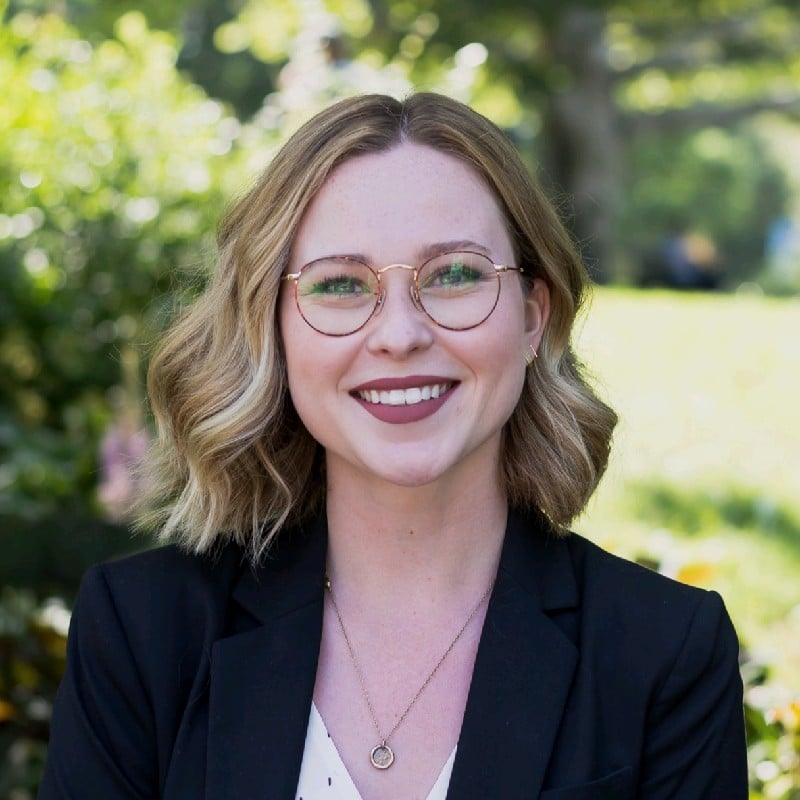
Taylor is a passionate problem-solver and environmentalist who works to drive systems change toward a more climate-positive, equitable, and socially-just future that is sustainable for people and the planet. She brings over 6 years of experience researching & developing sustainable materials from renewable resources, from both an academic and private start-up lens. With more than 5 sustainability related micro-credentials, Taylor believes in lifelong learning. Taking inspiration from biology in her approach to solving challenges, she demonstrates that nature is our greatest teacher. As a McMaster alumna, holding a B.Eng & Society and M.A.Sc in Chemical Engineering, Taylor brings new perspectives to the way we design and engineer our future, one that works with the planet, and not against it.

Curriculum & Structure

1

MODULE 1
What is Transition Leadership?

  • Transforming our perspectives on leadership.
  • Framing & reframing climate challenges.
  • Storytelling for meaningful change.

2

MODULE 2
Cultivating Inclusive Mindsets & Pathways

  • Identifying our roles as leaders.
  • Decolonizing our approach to leadership.
  • Incorporating Indigenous perspectives.

3

MODULE 3
Convening Dialogue: From Possibility to Action

  • Examining models of collective leadership.
  • Leveraging positive social dynamics.
  • Leading in times of crisis.

4

MODULE 4
Fostering Resilience

  • Building personal & professional resilience.
  • Mapping our resilience cycles.
  • Supporting collective climate action work.
This course is 25 learning hours of combined synchronous and asynchronous course materials.
Synchronous Learning

Weekly Live Discussions

There are 3 live Zoom meetings for participants to discuss the weekly pre-recorded lessons and readings.

Asynchronous Learning

Learning on Your Own Time

Asynchronous activities happen weekly and are meant to be completed on your own time. Activities include:

Assignments & Assessments​

The assessment of this course is a pass/fail. It comprises of:

50%

Participation Marks: Participation in weekly discussion forums, exercises, and live Zoom sessions.

50%

Final Assignment: Participants will submit either a paper, presentation, blog or video on a topic related to the course.