
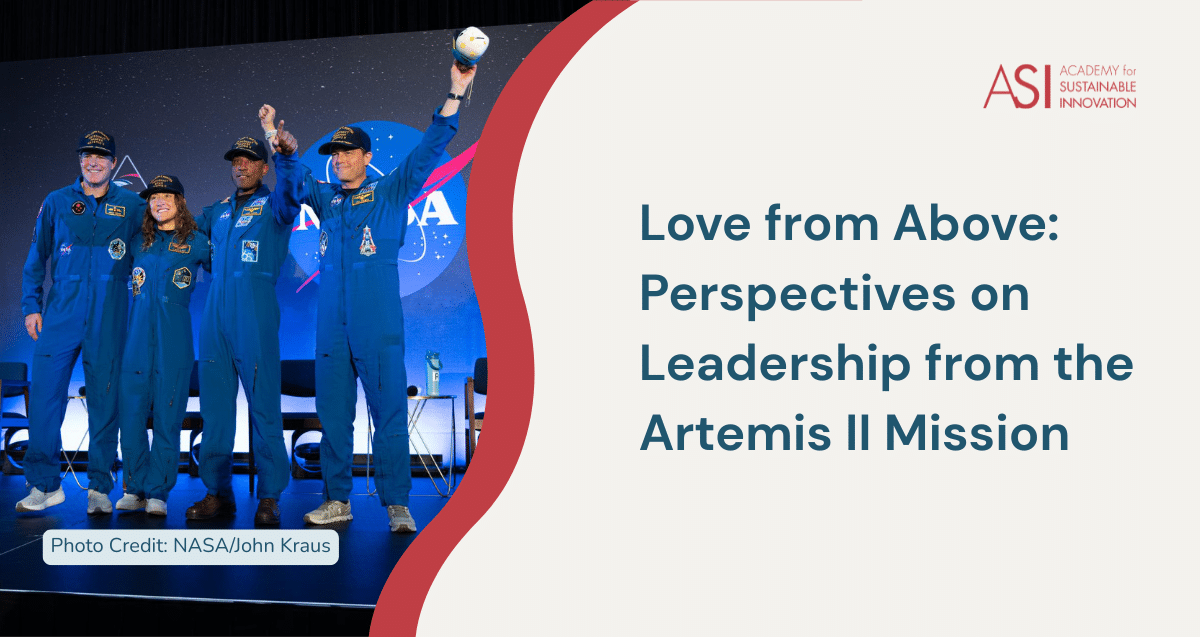
Artemis II was a mission defined as much by its technical ambition as its humanity
Last week, four humans (Reid Wiseman, Victor Glover, Christina Koch, and Jeremy Hansen) travelled farther from Earth than anyone has before – aboard Artemis II, a mission defined as much by its technical ambition as its humanity. And when they returned, though the data, milestones, and engineering feats were impressive, what they spoke about in reflection was something far more familiar: love, joy, gratitude, and what it means to be part of a crew.
They joked that while the science was extraordinary, it was the human experience that stayed with them. The shared responsibility. The sense of wonder. The way trust is built, not just through the incredible training and support they received, but through deep care for one another.
Canadian astronaut Jeremy Hansen captured this beautifully when he asked his crewmates to stand beside him, arm in arm, and reflect on what the world had just witnessed inside that capsule, right before going in for a group hug:
“The last [human experience I want to reflect on from the mission] is love. What you saw was a group of people who loved contributing, having meaningful contribution and extracting joy out of that… We are a mirror reflecting you, and if you like what you see, then just look a little deeper. This is you.”
"We are a mirror reflecting you, and if you like what you see, then just look a little deeper. This is you.”
Jeremy Hansen, Canadian Astronaut
Even at the edge of space – in one of the most high-tech, high-stakes environments imaginable, what matters most are the deeply human qualities that sometimes we overlook.
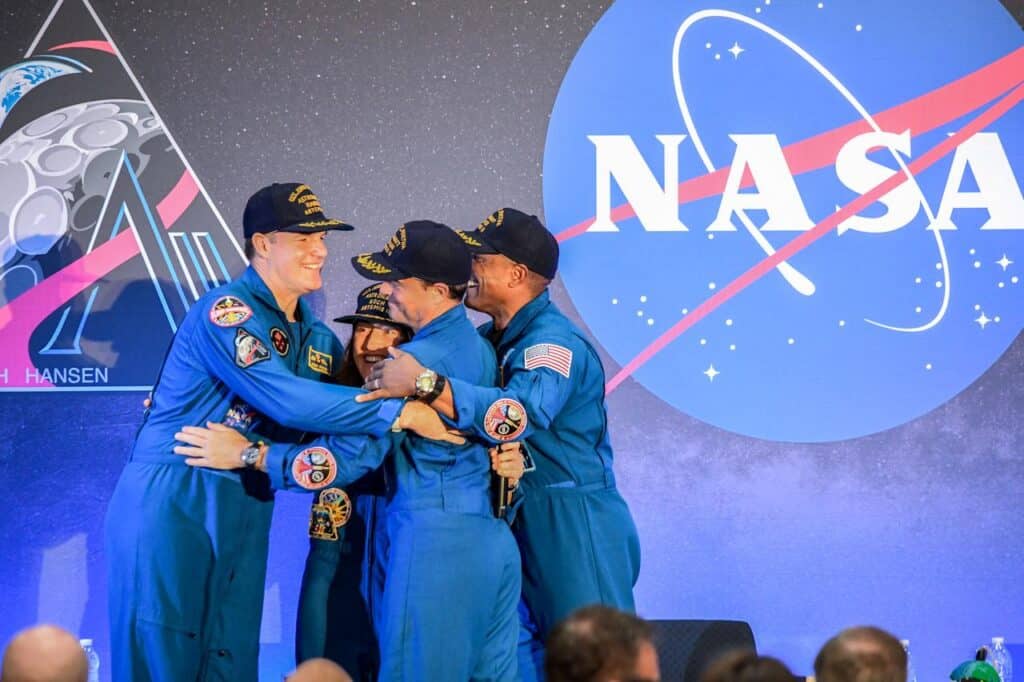
Photo Credit: NASA/Bill Stafford
American astronaut, Christina Koch, took the time to reflect on the question “What makes a crew?” and how this mission reshaped her understanding:
A crew is a group that is in it all the time, no matter what, that is stroking together every minute with the same purpose, that is willing to sacrifice silently for each other, that gives grace, that holds accountable,” Christina said. “A crew has the same cares and the same needs, and a crew is inescapably, beautifully, dutifully linked.”
"A crew has the same cares and the same needs, and a crew is inescapably, beautifully, dutifully linked."
Christina Koch, American Astronaut
The crew also reminded us, importantly, that though the four astronauts were rightly celebrated for their mission, they couldn’t have done it without the exceptional number of people and the moving parts behind the scenes. Leaders need teams, communities, and networks of people, all working together towards a common goal to effect large-scale impact. Everyone’s contributions, especially in the face of our most pressing challenges here on Earth, are critical to making change.
At ASI, we often talk about what it means to lead in a time of complexity and change. And again and again, we come back to this idea: leadership is how we show up for one another, and most importantly, it’s human-first.
Being human-first in our leadership means making space (pun intended) for connection, even when work feels urgent. It means recognizing that climate action isn’t solely a technical challenge – it’s a collective human one. It asks us to build trust, to stay rooted in what we care about most, and as the astronauts have shown us, to lead with love and remember the gratitude we all share for Earth.
In many ways, the crew offers a reflection of what’s possible here on Earth. Not because they are extraordinary, but because they remind us that the qualities we admire – purpose, joy, care, and shared responsibility – are already within us.
The Overview Effect, coined by author and space philosopher Frank White in 1987, describes the intense emotions that astronauts feel when they see our pale blue dot from the vantage point of space. Looking down at our shared home, in a sea of blackness, they experience a profound appreciation for the fragility and splendour of our planet – our home.
Though, we don’t need to travel to space to recognize what we love and to take action to protect it; perhaps, as Jeremy Hansen put it, it’s an invitation to look a little deeper into ourselves.
To lead a little more human, with a little more love.
And to remember the way we choose to show up – with each other, and for this planet, is what will ultimately carry us forward.